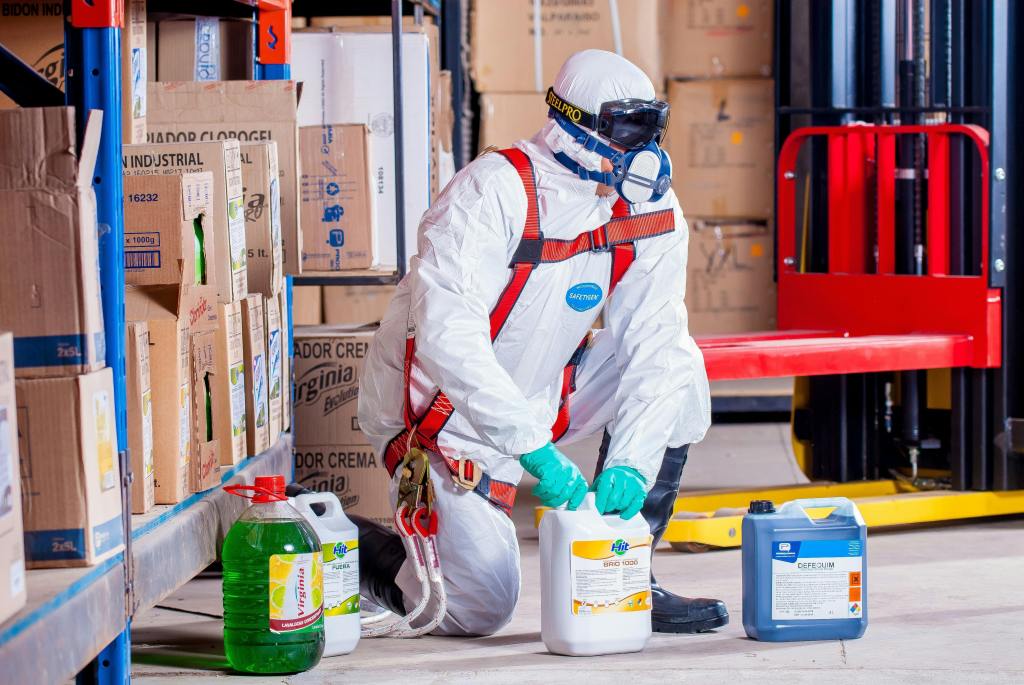
This is a review of Chapter 1 of Chemistry of Hazardous Materials by Meyer & Mauerman. It is not meant to be a summary of the chapter, but a few insights I learned and my general thoughts for application to a business. Though the book calls this chapter “Introduction”, we might call this chapter “Business Compliance Implications of Federal Hazardous Materials Law”
This chapter teaches that we need to understand the features of hazardous materials and how federal statutes are meant to protect us from their hazards. So, we must take chemicals and the CFR seriously before we can begin understanding them.
An example of what I learned is that 16 CFR 1500.121 states that a label be placed on all consumer products that contain hazardous substances. We must understand and read these labels, as well as keep these products out of reach of children. As of January 1, 2022, the civil penalty amounts for violating the Consumer Product Safety Act (CPSA) “are $120,000 for each violation and $17,150,000 for any related series of violations”.(1)
The chapter also discusses Clean Air Act (CAA) regulations, Clean Water Act (CWA) regulations, Resource Conservation and Recovery Acts (RCRA) regulations, OSHA regulations, DOT regulations, EPA regulations and a slew of other acts and regulations businesses are required to follow. These regulations are all found in the CFR code, which include storage and transportation rules, and they may require things like having emergency response plans and procedures.
This is just a small sample of facts I learned from this chapter. Overall, the chapter was a helpful introduction to what businesses are getting into when they choose to work with hazardous materials. I feel motivated to dig deeper into the CFR as a result of reading it.
The following are my comments, not information obtained from the book.
It is clear that financial penalties apply to those companies that don’t obey these codes. In practice, implementation of CFR requirements is typically managed by environmental health and safety (EHS) professionals or regulatory consultants. Legal counsel is often consulted when liability exposure must be evaluated, complex interpretations arise, or enforcement actions, audits, or investigations occur.
Check with local, state, and fire authorities to see if further action is required in addition to the above.
All of these truths must be kept in mind as companies consider how to protect people and the environment and how to avoid fines, lawsuits, prison time, and other consequences.
I used AI to assist in writing part of this post.
Sources:
Federal Register. (12/01/2021). Civil Penalties: Notice of Adjusted Maximum Amounts. https://www.federalregister.gov/documents/2021/12/01/2021-26082/civil-penalties-notice-of-adjusted-maximum-amounts?utm_source=chatgpt.com
 HazMat Code & Practice
Leave a comment